

How to Coordinate Chauffeur Collections at London Hotels
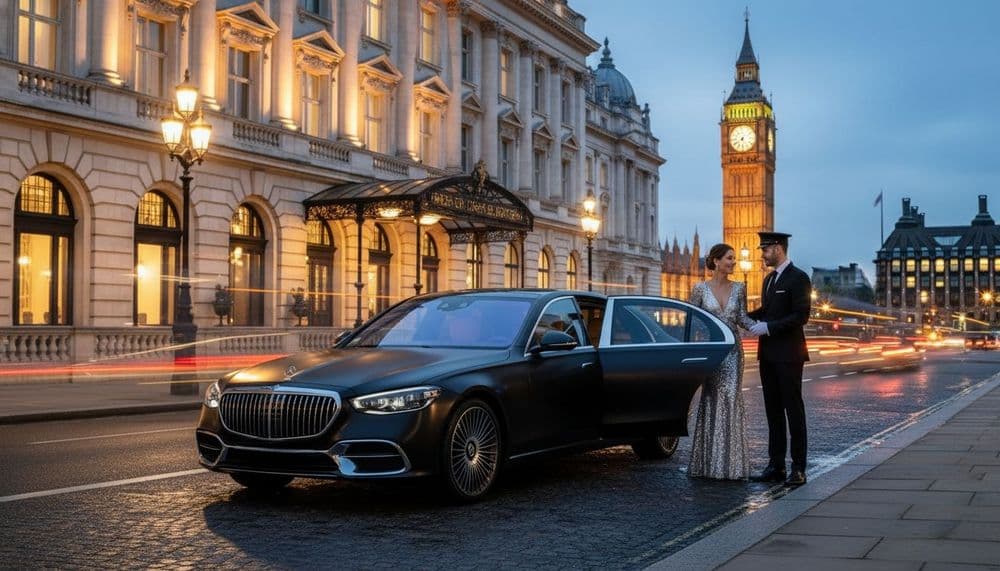
Luxury hotels in Mayfair, Knightsbridge, Belgravia and the West End often have busy entrances, controlled stopping areas and several guests arriving at the same time. A well-planned chauffeur collection depends on accurate hotel details, clear passenger communication and a vehicle suited to the onward journey.
Confirm the exact hotel entrance
Some London hotels have more than one entrance, while others use separate doors for residents, events, restaurants or private functions. Provide the full hotel name, street and intended entrance when booking. If the collection relates to a ballroom, private dining room or conference area, include that information as well.
Use the guest name and booking reference
The chauffeur company should receive the travelling passenger’s name and a working mobile number. Where appropriate, provide the hotel reservation name or event contact. This helps the dispatch team coordinate with the passenger without asking reception staff to disclose private booking information.
Plan airport arrivals to the hotel
For an airport arrival, send the flight number, landing date, terminal, passenger count and luggage details. Flight monitoring allows the pickup plan to follow the aircraft’s actual arrival, but immigration and baggage times still vary.
Choose a vehicle for the luggage
An executive saloon is practical for one or two passengers with limited luggage. A first-class saloon offers additional rear-seat comfort but does not provide unlimited boot space. A Mercedes-Benz V-Class is usually more suitable for families, groups, several large cases or passengers travelling with shopping and specialist equipment.
Hotel departures and waiting arrangements
Central London hotels may not permit a vehicle to remain directly outside for long periods. The chauffeur may need to wait nearby and approach when the passenger is ready. Tell the dispatch team when the guest expects to leave the room, not simply when an appointment begins elsewhere.
Allow time for luggage and reception
Checking out, collecting stored luggage and settling hotel charges can take longer than expected. For airport departures or fixed meeting times, build this into the collection schedule. The chauffeur should not be expected to recover lost time by driving faster.
Coordinate multi-stop London itineraries
Hotel guests frequently combine meetings, shopping, restaurants, theatre visits and private events in one day. Hourly or as-directed hire can be more practical than arranging separate transfers when the itinerary contains several stops or may change.
Share the complete schedule
Provide each address, required arrival time, passenger number and any waiting requirement. Central London traffic conditions can make an apparently short journey take considerably longer during peak periods. A realistic schedule protects important appointments and reduces last-minute changes.
Privacy and guest communication
Passenger names, telephone numbers and itineraries should be shared only with the people coordinating the booking. The organiser should identify one principal contact for updates. Driver and vehicle details can then be sent through the agreed channel before travel.
When several guests or vehicles are involved, use a clear passenger list showing who travels in each car. This is particularly important for corporate groups, family offices, diplomatic visitors and event teams.
Information to provide when booking
Send the hotel name and entrance, collection date and time, destination, passenger numbers, luggage quantities and vehicle preference. Include flight or train details when relevant, plus every planned stop and the organiser’s contact number.
This guide explains how to coordinate hotel collections and onward travel. For available booking options, explore our London hotel chauffeur transfers.